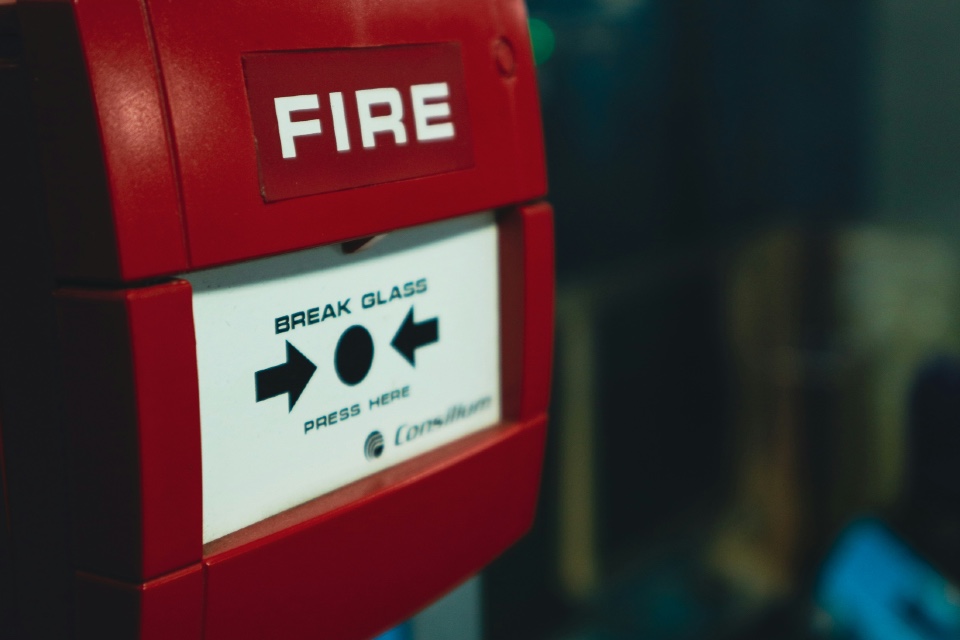

For occupational health and safety leaders attending the Forum, fire safety remains a critical responsibility. While compliance frameworks and prevention protocols are well established, the most resilient organisations go further. This involves treating every incident and near miss as a learning opportunity. As such, data-driven post-fire investigations and sector benchmarking are becoming essential tools for driving continuous improvement in fire safety strategies…
The Value of Incident Reporting
Accurate, timely reporting is the foundation of effective learning. By capturing details of fires, false alarms, and near misses, organisations can build a comprehensive dataset that reveals patterns and vulnerabilities.
Modern reporting platforms allow staff to log incidents instantly via mobile devices, attaching photos, sensor data, or witness statements. This creates a richer record for analysis and ensures frontline observations are not lost. For OH&S leaders, this data is vital in identifying recurring risks, whether linked to equipment faults, human error, or environmental conditions.
Post-Fire Investigations as Learning Tools
When a fire or serious incident occurs, thorough investigation goes beyond establishing cause and liability. Best practice now treats investigations as opportunities to improve systems, training, and culture.
Many organisations adopt a ‘no-blame’ approach, encouraging openness so that root causes, such as unclear procedures or insufficient training, can be addressed. Findings are then fed back into revised fire risk assessments, updated evacuation plans, or targeted refresher training for staff.
Benchmarking for Better Performance
Benchmarking is another powerful tool. By comparing incident rates, response times, and compliance scores with sector peers, organisations can identify where they lag behind best practice. Industry groups and regulators are increasingly facilitating anonymised benchmarking schemes, allowing OH&S leaders to measure performance against meaningful external standards.
This comparative insight helps organisations justify investment in new fire safety systems, from advanced detection technology to improved evacuation signage. It also provides reassurance to boards and regulators that fire safety management is not only compliant but progressive.
Turning Data into Action
Data alone does not deliver safety: it must be acted upon. Forward-thinking OH&S leaders are creating feedback loops where incident data and benchmarking insights directly shape policies, procurement, and training.
Dashboards and regular reporting cycles keep executives informed, while sharing results with staff builds transparency and reinforces a culture of vigilance. Over time, this approach shifts fire safety from a compliance activity to a continuous improvement journey.
Building Resilience Through Learning
The organisations most resilient to fire risk are those that embrace data-led learning. By treating every incident as an opportunity to improve, benchmarking against peers, and closing the loop with meaningful action, OH&S leaders can build safer workplaces and stronger organisational resilience.
Are you searching for Fire Safety solutions for your organisation? The Occupational Safety & Health Forum can help!
Photo by Vitaly Gariev on Unsplash