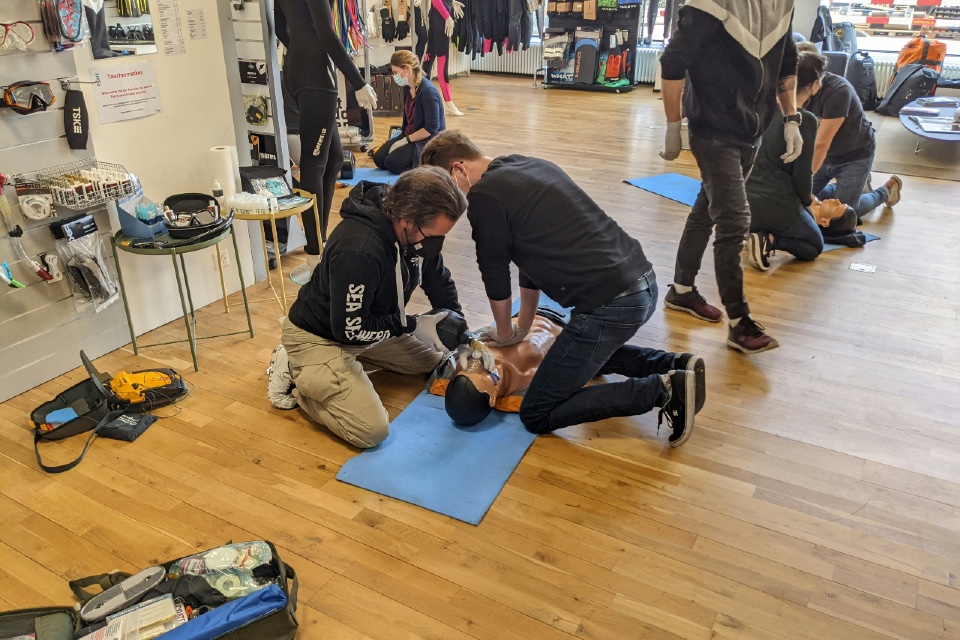

First aid training has historically followed a familiar pattern: classroom instruction, demonstration, and practice on a manikin. While effective in teaching core techniques, traditional methods often struggle to replicate the stress, unpredictability, and split-second decision-making of real emergencies. That’s changing. A growing number of organisations are turning to scenario-based learning and immersive technology to build confidence, competence, and genuine readiness among their first aiders…
Beyond the Checklist
Traditional first aid training tends to be procedural, focused on steps to follow rather than real-world decision-making. Scenario-based training turns this model on its head. Instead of rehearsing fixed sequences, learners are placed in simulated, high-pressure situations that demand judgement, prioritisation, and communication.
For example, participants might have to respond to a cardiac arrest in a noisy warehouse, a chemical burn in a lab, or an employee collapsing during a hybrid meeting. Trainers assess how well they adapt, stay calm, and delegate tasks, not just whether they remember the textbook sequence of actions.
This approach helps bridge the gap between theory and practice, ensuring that first aiders can think clearly under pressure when it matters most.
The Rise of Immersive Technology
Advances in virtual and augmented reality (VR/AR) are taking scenario-based learning to new heights. Using headsets and digital environments, trainees can experience lifelike emergencies, from road traffic collisions to mass-casualty incidents, without risk.
These tools allow learners to practice critical thinking, situational awareness, and emotional control. Studies show that retention rates from immersive learning can be up to 75% higher than traditional training, and that participants report feeling more confident applying skills afterwards.
For high-risk industries such as construction, manufacturing, and healthcare, VR-based training offers a scalable and safe way to expose teams to rare but high-impact scenarios.
Building Confidence Through Realism
The goal of scenario-based training is not to induce stress, but to normalise it. By repeatedly practising under realistic conditions, first aiders learn to manage adrenaline and anxiety, improving both reaction speed and effectiveness.
Organisations that have adopted immersive or scenario-led models report not only improved competence but also greater engagement and enthusiasm from employees, who value hands-on, relevant learning experiences.
A Cultural Shift in Safety
The best-performing organisations are moving from compliance-led first aid training to performance-led preparedness. By embracing simulation, digital tools, and realistic scenarios, they’re building a workforce that’s not just trained, but truly ready to respond.
Because when emergencies happen, confidence is just as critical as competence.
Are you looking for First Aid solutions for your organisation? The Occupational Safety & Health Forum can help!